
The Missing Link in Industry 4.0: Bringing the Industrial Workspace into View
Manufacturers have invested heavily in Industry 4.0 and Industry 5.0 technologies to digitize operations, automate processes, and optimize the performance of machines and infrastructure. Yet despite these investments, many organizations continue to struggle with production delays, material shortages, excessive work-in-progress inventory, inefficient workflows, and avoidable downtime.
The reason is often surprisingly simple: while machines and facilities have become increasingly connected, the movement of people, materials, tools, vehicles, and work-in-progress frequently remains invisible. Organizations can accurately monitor what their equipment is doing, but often lack real-time insight into how work is actually flowing through the operation.
Without visibility of these moving elements, managers are forced to rely on manual updates, periodic audits, operator experience, and historical reports to make critical operational decisions. As a result, bottlenecks can go undetected, valuable time is spent searching for assets and equipment, and opportunities to improve productivity remain hidden.
The Missing Component of the Digital Factory
Traditional Industry 4.0 solutions have delivered significant advances in monitoring and optimizing fixed assets such as CNC machines, robots, presses, and facility infrastructure. These systems provide valuable information on machine performance, utilization, maintenance, and output.
However, industrial operations are about far more than machines. Materials move between workstations. Tools are shared across production areas. Work-in-progress travels through multiple stages. Forklifts, tugs, and vehicles transport components throughout the facility. People coordinate, assemble, inspect, and manage production activities.
These moving assets and resources are often the source of operational delays, inefficiencies, and variability. Yet they are frequently the least visible elements within the industrial environment. This creates a significant gap in the digital factory, one that cannot be filled through machine monitoring alone.
Why RTLS Matters
Real-Time Location Services (RTLS) address this challenge by providing continuous visibility into the location and movement of people, equipment, materials, vehicles, and processes throughout a facility. By capturing and analyzing location data in real time, organizations gain a much clearer understanding of how work is progressing across the operation.
The value extends well beyond simple asset tracking. RTLS provides operational intelligence that helps organizations understand movement patterns, resource utilization, dwell times, material flow, and process performance. Armed with this information, manufacturing and operations leaders can identify bottlenecks more quickly, reduce wasted motion, improve asset utilization, and make better-informed decisions.
The result is improved productivity, reduced downtime, enhanced workforce coordination, and stronger safety performance. Perhaps most importantly, RTLS provides organizations with the real-time operational awareness needed to manage today’s increasingly complex industrial environments.
Building the Real-Time Industrial Workspace Digital Twin
The true power of RTLS emerges when location intelligence is combined with other operational data to create a real-time industrial workspace digital twin, a continuously updated digital representation of the physical workspace.
Unlike a static floor plan or historical report, a real-time digital twin reflects the real-world state of operations as they evolve. It incorporates the dynamic elements of production, including people, materials, mobile equipment, work-in-progress, machine status, space utilization, safety conditions, and workflow progress.
By feeding live location data into this digital model, organizations gain the ability to monitor operational activity as it happens, identify constraints before they become major issues, and evaluate potential changes before implementing them. The real-time digital twin becomes a platform for continuous improvement, supporting better planning, resource allocation, operational resilience, and decision-making.
In essence, RTLS provides the dynamic operational context that transforms a digital model into a living representation of the industrial workspace. After all, operations are defined by movement—and movement is exactly what RTLS captures.
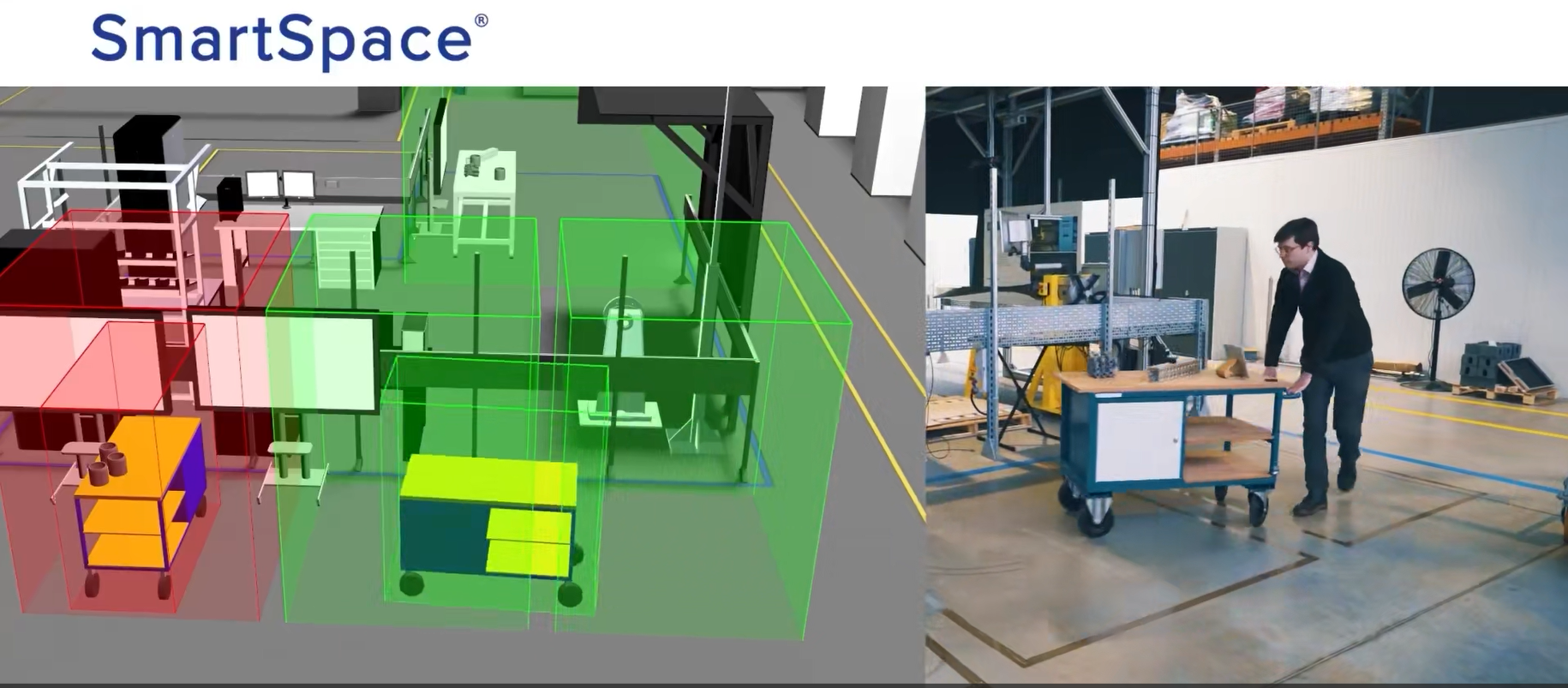
Real-Time Industrial Workspace Digital Twin Provided by Ubisense
Why Ubisense
For organizations seeking to unlock the full value of a Real-Time Industrial Workspace Digital Twin, precision matters. Ubisense RTLS delivers highly accurate, live location data in complex industrial environments where reliability and operational confidence are essential.
With Ubisense, manufacturers can accurately locate critical assets, tools, vehicles, materials, and work-in-progress at any point in time. Rather than relying on manual processes, assumptions, or incomplete information, operations teams gain a trusted source of real-time operational insight.
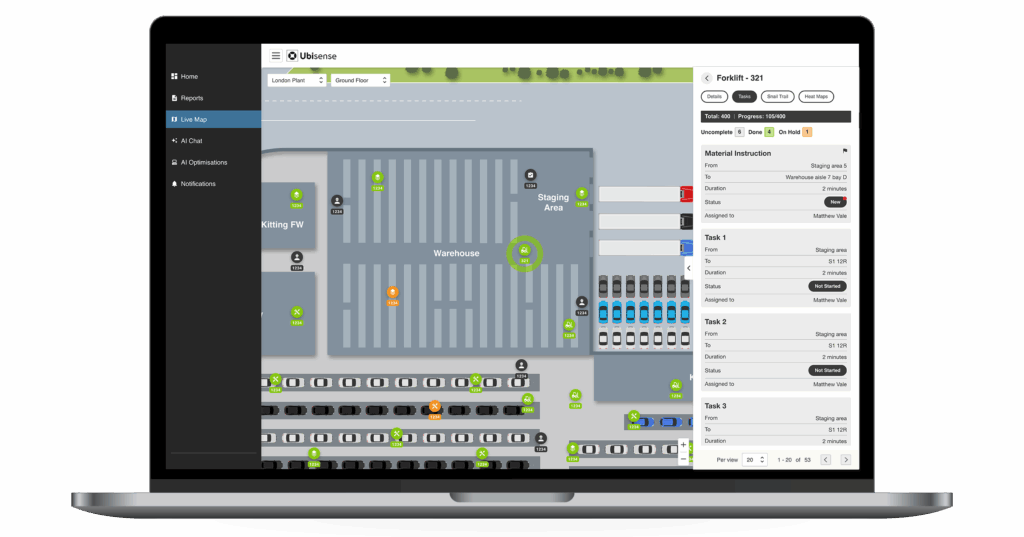
Ubisense’s SmartSpace® in an Industrial Environment
This visibility enables organizations to improve throughput, reduce wasted motion, strengthen process control, increase accountability, and support more predictable production outcomes. By connecting the moving elements of industrial operations to the broader digital ecosystem, Ubisense helps organizations move beyond isolated data points and toward a comprehensive understanding of how work truly flows across the enterprise.
As manufacturers continue their digital transformation journey, the organizations that achieve the greatest success will be those that can see, understand, and optimize the entire workspace, not just the machines within it. Ubisense provides the location intelligence that makes this possible, serving as a key foundation for the Real-Time Industrial Workspace Digital Twin and enabling continuous operational improvement across the factory floor.
By H. Brent Baker Sr., President, Orders from the General, LLC
Ian Boulton, Chief Digital Officer, Horizon Defense