
How Real-Time Location Intelligence Is Transforming Emergency Department Patient Flow
Emergency Departments (A&E) are under increasing pressure to deliver high-quality care while managing rising patient demand, limited capacity and growing operational complexity.
Healthcare systems are facing a combination of challenges, including an ageing population, increasingly complex patient needs, rising emergency admissions and ongoing pressure on hospital capacity. At the same time, hospitals are being challenged to improve throughput, reduce waiting times and optimise existing resources without significant increases in physical infrastructure.
Although hospitals have made significant progress in digitising clinical information through systems such as Electronic Patient Records (EPR), laboratory and imaging platforms, many still lack real-time visibility into one of their most critical operational processes: patient flow.
Every day, clinicians and flow managers make decisions about patient movement, available treatment spaces, waiting times and resource allocation. However, these decisions often rely on manual updates, phone calls and physical checks because operational information is not always available when it is needed.
Hospitals can measure outcomes such as waiting times and length of stay, but understanding the events and bottlenecks that influence those outcomes remains challenging. Improving patient flow starts with improving operational visibility: understanding how patients, staff, spaces and resources move through the department in real time.
Understanding the Patient Journey
A patient's journey through the emergency department rarely follows a straight line. They move between waiting areas, treatment rooms, diagnostic departments and wards while interacting with multiple caregivers before either being admitted or discharged.
Most hospital systems record key milestones but provide limited visibility into everything that happens between them.
For example, hospitals often need to answer questions such as:
- Has this patient been reviewed recently?
- How long have they been waiting without clinical interaction?
- Which treatment spaces are genuinely occupied?
- Which patients are ready to move to the next stage of care?
- Where are bottlenecks beginning to develop?
Without objective operational data, answering these questions often depends on manual communication rather than live information.
Real-Time Location Systems (RTLS) address this challenge by automatically capturing patient movement throughout the department, creating a continuously updated timeline of each patient's journey from arrival through to discharge.
Rather than relying solely on retrospective reports, hospitals gain real-time operational insight that supports faster decision making and continuous process improvement.
Delivering the Right Accuracy in the Right Place
One of the biggest misconceptions surrounding RTLS is that every part of a hospital requires the same level of positioning accuracy.
In reality, different clinical environments have very different operational requirements. The level of positioning accuracy required depends entirely on the workflow being supported and the decisions being made.
A hybrid approach allows hospitals to match the technology to the workflow.
Bluetooth Low Energy (BLE) has become increasingly common within hospitals, with many organisations already operating BLE-enabled Wi-Fi infrastructure for asset tracking and IoT applications. Leveraging this infrastructure provides an efficient and cost-effective way to introduce location awareness across large parts of the hospital. However, BLE alone cannot support many of the workflows that matter most in emergency care. While it performs well at zone or room level, BLE cannot consistently:
- Distinguish between adjacent beds in a shared ward.
- Determine which treatment bay a patient occupies.
- Differentiate between a caregiver walking through a room and actively treating a patient.
- Provide the positional certainty needed for automated workflow rules.
For these applications, higher positional accuracy is essential. Rather than replacing existing infrastructure, many hospitals are adopting hybrid RTLS architectures that combine BLE with Ultra-Wideband (UWB). Existing BLE infrastructure continues to provide hospital-wide visibility, while UWB delivers centimetre-level positioning only where operational decisions genuinely depend on greater precision. The result is a solution that balances infrastructure cost with operational performance.
From Location Data to Operational Intelligence
Knowing where a patient is only tells part of the story. A patient may spend an hour in a treatment room, but were they receiving continuous care during that time, or were they waiting to be seen? Were they waiting for diagnostics? Waiting for medication? Waiting for a bed? Understanding this distinction is essential for improving patient flow. When patient and caregiver location intelligence is combined with workflow logic, hospitals move beyond simply knowing where patients are and begin to understand how care is being delivered. This creates a richer operational picture and lays the foundation for a real-time digital twin of the emergency department. By combining patient and caregiver locations with configurable workflow logic, RTLS can automatically build an objective timeline of care. This enables hospitals to understand:
- When a patient enters each stage of care.
- When clinical interactions occur.
- How long each interaction lasts.
- Time between caregiver visits.
- Actual waiting time versus active treatment time.
- Bed occupancy and utilisation.
Rather than simply measuring length of stay, hospitals gain meaningful operational intelligence that helps explain why delays occur and where improvements can be made. Importantly, the objective is not staff surveillance. The purpose is to improve patient flow and ensure patients receive timely care. Interaction data can be anonymised or aggregated where required to support organisational policies and privacy requirements. 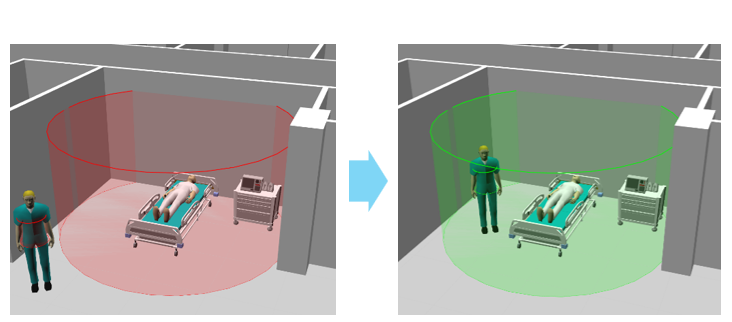
Figure 1: Example of patient/caregiver interaction in SmartSpace® 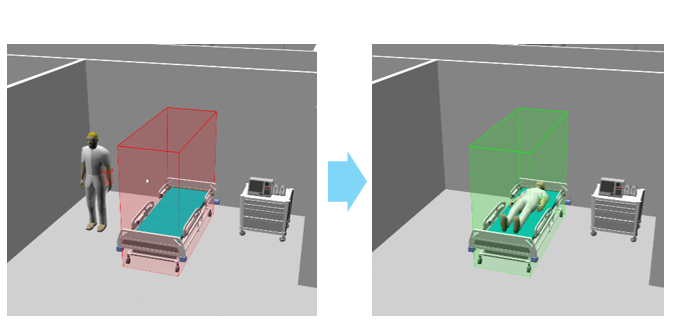
Figure 2: Example of patient/bed association in SmartSpace®
From Reporting Delays to Preventing Them
Most hospitals already know how long patients waited yesterday. The greater challenge is understanding who is waiting today, why they are waiting and identifying emerging delays before they affect patient care. By applying configurable business rules to real-time location data, hospitals can automatically identify operational situations that require attention before they impact patient care. Examples include:
- Patients waiting too long without caregiver interaction.
- Unexpected patient movements.
- Excessive occupancy of treatment bays.
- Delays between stages of care.
- Emerging bottlenecks within specific clinical areas.
Rather than waiting for end-of-day reports, these events can automatically trigger notifications through dashboards, Microsoft Teams, SMS, email or existing hospital applications. This allows clinicians and flow managers to intervene while there is still an opportunity to improve patient outcomes and departmental performance.
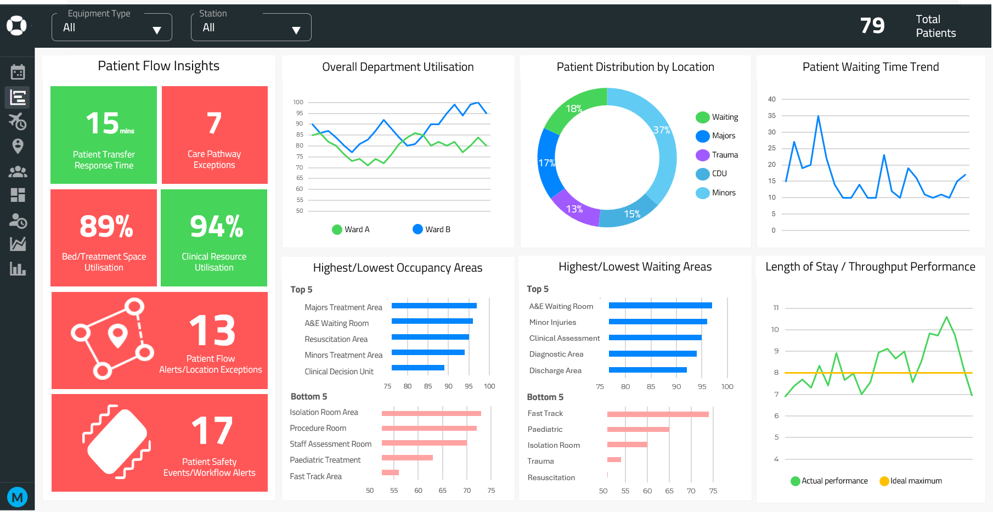 Figure 3: Dashboard within SmartSpace® showing relevant patient flow information
Why Reliable Positioning Matters
Automating clinical workflows depends on confidence in the underlying location data. Emergency departments present particularly challenging environments for indoor positioning. Medical equipment, moving beds, temporary partitions and large numbers of people all affect radio propagation, making reliability just as important as accuracy. Many UWB solutions rely solely on Time Difference of Arrival (TDoA) to calculate location. Ubisense Dimension4™ sensors uniquely combine TDoA with Angle of Arrival (AoA) measurements, using both the timing and direction of radio signals to determine position. By combining these independent measurement techniques, Dimension4™ provides approximately twice the measurement robustness of conventional TDoA-only systems. For hospitals, this means greater confidence in:
- Bed-level patient positioning.
- Patient-caregiver interaction monitoring.
- Automated workflow rules.
- Bed occupancy information.
- Operational analytics.
When clinical workflows depend on accurate location data, robustness becomes just as important as accuracy.
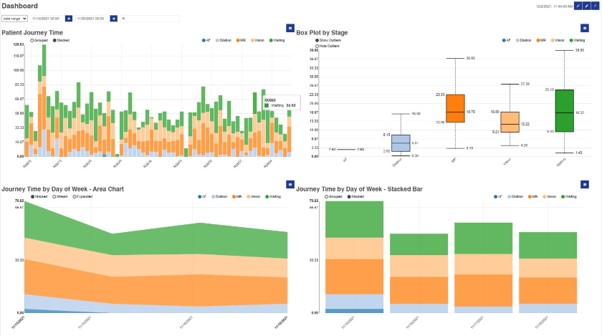 Figure 4: Example report dashboard showing patient flow analytics in SmartSpace®
Building a Real-Time Digital Twin of the Emergency Department
Location technology is only one part of the solution. The real value comes from combining patient locations, caregiver interactions, bed occupancy and workflow events into a single operational view of the department. Platforms such as Ubisense SmartSpace® use real-time location data, caregiver interactions and workflow events to create a real-time digital twin of the emergency department, allowing clinicians and operational managers to understand what is happening as it happens. Instead of piecing together information from multiple disconnected systems, hospitals gain a continuously updated operational picture that supports faster decisions, improved resource utilisation and better patient flow.
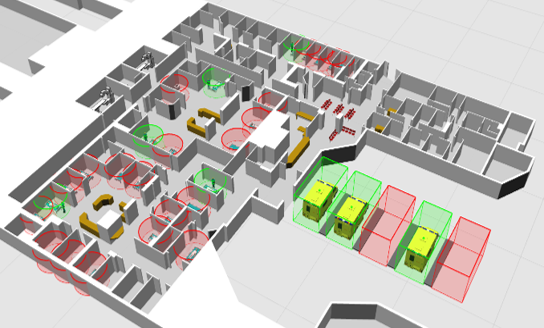
Figure 5: Example of a hospital real-time digital twin in SmartSpace®
Improving Throughput Without Increasing Capacity
As emergency departments continue to experience growing demand, improving patient flow has become one of the most effective ways to increase capacity without expanding physical infrastructure. The first step is understanding what is actually happening across the department in real time. By combining existing BLE infrastructure with high-precision UWB where required, and transforming location data into operational intelligence through SmartSpace®, hospitals can move beyond simple asset tracking to create a truly connected emergency department. By bringing together patient locations, caregiver interactions, workflow events and operational insights within a real-time digital twin, hospitals gain the visibility needed to identify bottlenecks earlier, make better-informed decisions and unlock hidden capacity within existing resources. The result is a safer, more efficient operation where clinicians spend less time searching, coordinating and documenting, and more time focused on delivering exceptional patient care. More importantly, it enables hospitals to improve patient flow, enhance operational performance and increase capacity without increasing physical space.